
Many years have passed but the misconception of ERP systems as “the multi-billion-dollar giant” with seemingly endless IT budgets and vast, complex infrastructures still remains. The term “Enterprise Resource Planning” itself often conjured images of very complex, prohibitively expensive, and protracted implementations that only the largest of organizations could even contemplate. This historical perception led many agile and rapidly growing smaller businesses to believe that the ERP experience was either entirely out of their financial reach, utterly unnecessary for their size, or simply too intricate to even consider.
But here’s the game-changing truth; modern ERP solutions, particularly those built on cloud-based platforms come with profound benefits for businesses of virtually all sizes, including the vibrant, dynamic SMEs that are the true engines of economic growth across Africa and beyond.
What is ERP Software?
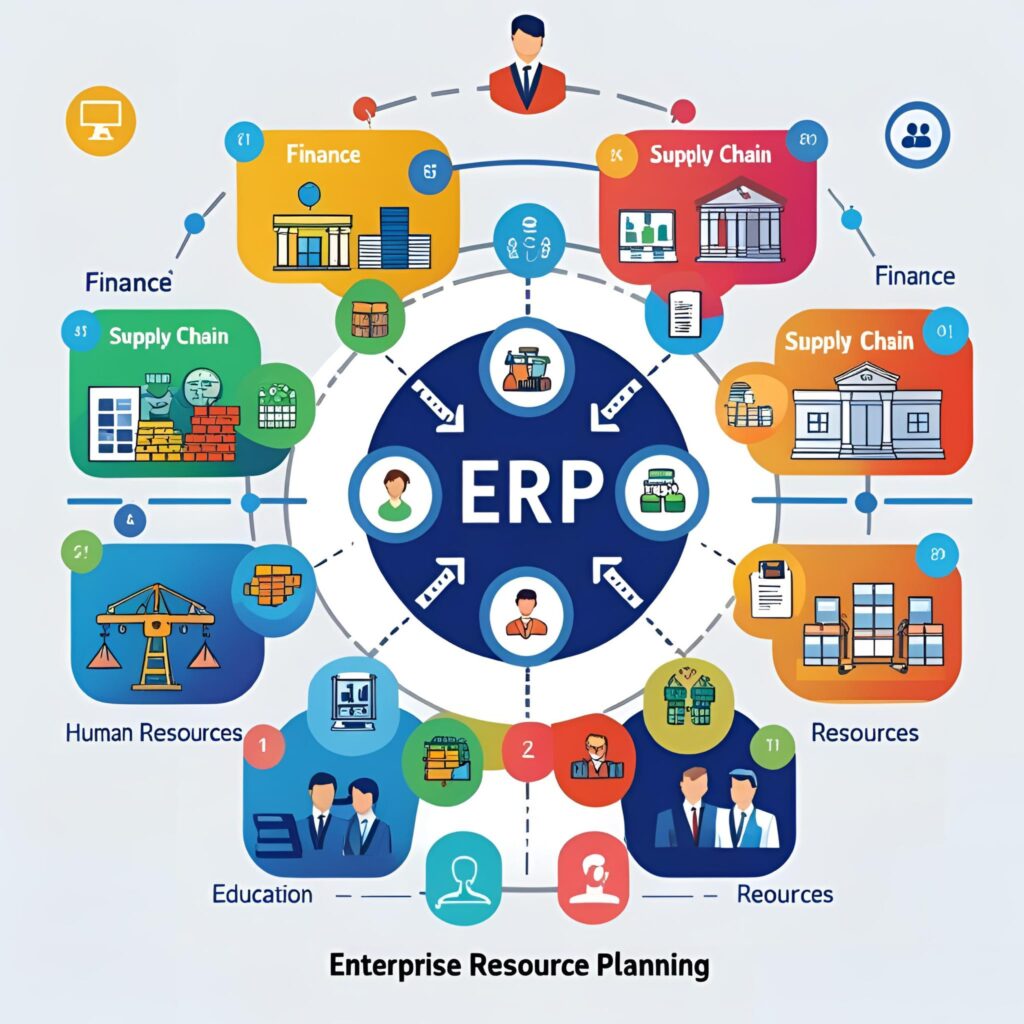
So, What exactly is ERP software? At its most fundamental core, an ERP system is a comprehensive, integrated software suite meticulously designed to manage and automate all core business processes across various departments. This includes, but not limited to, vital functions like finance and accounting, human resources, manufacturing operations, intricate supply chain logistics, customer services, and efficient procurement. The magic lies in bringing all these disparate functions together, seamlessly, within a single, unified database. Think of it as a genuine game-changer for businesses earnestly seeking integrated, streamlined solutions. It has become a strategic, indispensable imperative for any business truly serious about achieving and sustaining long-term, impactful success.
The Hidden Costs: Why Disconnected Systems Are a Drag on Your Business Growth
Many businesses, especially those in their growth phase, operate with a collection of disparate systems. While each tool might serve its purpose individually, the lack of integration creates “silos” – isolated islands of information that rarely communicate effectively. This fragmented approach, seemingly harmless on the surface, carries a heavy, often hidden, cost that actively prevents businesses from reaching its full potential.
One of the most immediate and frustrating consequences of siloed systems is the rampant duplication of data. Imagine your sales team taking an order, entering customer details into their CRM. Then, the accounting team re-enters those same customer details, along with the order specifics, into their invoicing software. Simultaneously, the warehouse manager might be manually updating another spreadsheet to track inventory deductions. This triple, sometimes quadruple, entry of the same information is not just a colossal waste of time; it’s an open invitation for errors.
A simple typo in one system won’t automatically correct itself in another. A customer address update in your sales system might never reach your billing system, leading to delayed payments or even lost invoices. Inconsistent pricing data, outdated customer contact information, or incorrect product codes can lead to a cascade of problems down the line – from shipping errors to angry customers, and eventually, financial losses. Reconciling these discrepancies becomes a full-time job, diverting valuable human resources from more productive activities. The more data you handle, the more systems you use, the larger this “error epidemic” grows, quietly eroding your profitability and reputation.
Operational Inefficiencies & Bottlenecks
Disconnected systems inherently lead to disjointed workflows. Processes that should flow seamlessly from one department to another become fragmented, requiring manual handoffs, email exchanges, and phone calls to bridge the gaps. These manual touchpoints create bottlenecks, slowing down critical business cycles like order-to-cash, procure-to-pay, or production-to-delivery. Tasks that could be automated become laborious, draining valuable employee time and increasing operational costs. Imagine the time lost in your manufacturing plant if your production schedule isn’t automatically updated with new orders, or if your field service team can’t access customer history on-the-go. These inefficiencies aren’t just frustrating; they directly impact your capacity to process orders, deliver services, and scale your operations, putting a ceiling on your business growth.
In an era where customer experience is paramount, siloed systems can be a fatal flaw. When your customer service representative can’t immediately access a customer’s full purchase history, past interactions, outstanding invoices, or current order status because the information is scattered across different departmental systems, it leads to frustrating delays, repetitive questioning, and a general sense of incompetence from the customer’s perspective.
Imagine a customer calling about a delayed order, and your representative has to put them on hold to call the warehouse, then call finance, just to piece together the answer. This creates a disjointed, impersonal, and frustrating experience for your clients. A unified customer view, however, allows for personalized service, proactive problem-solving, and ultimately, builds strong, lasting customer loyalty.
Growth Without Control: Why Disconnected Systems Can’t Keep Up
As your business grows – adding more customers, products, services, or locations – the strain on disconnected systems becomes immense. What might have been manageable with a handful of clients and a few spreadsheets becomes an unworkable nightmare with hundreds or thousands. Manual processes don’t scale efficiently; they simply require more manual effort, more staff, and more errors.
Trying to expand into new markets, launch new product lines, or increase production capacity becomes incredibly complex and risky without a unified system to manage the underlying data and processes. Decision-makers lack the consolidated data needed to confidently pursue new opportunities or accurately assess the risks of expansion. Ultimately, siloed systems create an invisible “growth ceiling,” limiting your ability to adapt, innovate, and capitalize on opportunities that require agile and informed decision-making. You simply can’t grow without gaining greater control, and disparate systems inherently oppose that control.
Understanding What is ERP Software: A Look at its Core Components
Now that we understand the inherent pitfalls of fragmented systems, let’s peel back the layers of Enterprise Resource Planning to see what truly makes it a transformative solution. An ERP system is a meticulously designed suite of interconnected applications, or “modules,” each dedicated to managing specific business functions. The true power, however, lies in how these modules communicate and share data seamlessly through a centralized database, eliminating silos and providing a unified view of your entire operation.
Think of an ERP like PurpleDove as a well-orchestrated symphony. Each instrument module plays its distinct part (function), but they all follow the same score (centralized data and processes) under the direction of the conductor (the integrated ERP system) to produce a harmonious and powerful result – a smoothly running, efficient, and insight-driven business.
Let’s explore these critical components that make up a robust ERP system:
A. Financial Management: The Heartbeat of Your Business
The Finance Module: From Bookkeeping to Strategic Financial Control
At the very core of any ERP system lies the Financial Management module, often considered the heart of the entire enterprise. This module goes far beyond basic bookkeeping; it provides a comprehensive suite of tools to manage all monetary transactions and financial data across your organization. For businesses in Nigeria, where accurate financial reporting and compliance are paramount, this module is indispensable.
Key functionalities include:
- General Ledger : The central repository for all financial transactions, providing a complete and accurate record of your company’s financial health.
- Accounts Payable : Streamlines the process of managing vendor invoices, tracking payments, and ensuring timely disbursements, helping you maintain good supplier relationships and control cash outflow.
- Accounts Receivable : Manages customer invoicing, tracks payments, automates reminders, and helps accelerate cash inflow, improving your working capital.
- Cash Management: Provides real-time visibility into your cash position, enabling better planning for liquidity and investment.
- Budgeting and Forecasting: Tools to create, manage, and monitor budgets, allowing you to compare actual performance against planned expenditures and make informed financial projections.
- Fixed Asset Management: Tracks the lifecycle of your company’s assets, from acquisition and depreciation to disposal, ensuring accurate financial reporting and tax compliance.
- Financial Reporting: Generates a wide array of reports, including Profit & Loss statements, Balance Sheets, Cash Flow statements, and customizable analytical reports, providing invaluable insights for strategic decision-making. For a Nigerian business, this also means easier compliance with local tax regulations and auditing standards.
- Multi-currency and Multi-company Support: Essential for businesses operating across different regions or with multiple subsidiaries, allowing seamless management of diverse financial operations.
By centralizing financial data and automating processes, the Financial Management module ensures accuracy, reduces human error, and provides the timely insights necessary for sound financial stewardship.
B. Supply Chain Management : The Backbone of Operations
Supply Chain Module: Optimizing Every Link from Procurement to Delivery
For businesses that deal with physical goods be it manufacturing, retail, or distribution the Supply Chain Management module is an absolute game-changer. It orchestrates the entire flow of goods, from sourcing raw materials to delivering finished products to the customer.
Key functionalities include:
- Procurement/Purchasing: Automates the purchasing process, from requisition to purchase order generation, vendor management, and invoice matching. It helps you find the best suppliers, negotiate better terms, and ensure timely acquisition of materials.
- Inventory Management: Provides real-time tracking of inventory levels across multiple locations, helping to prevent stockouts and overstocking. Features include lot/serial number tracking, batch management, and inventory valuation.
- Warehouse Management : Optimizes warehouse operations, including receiving, put-away, picking, packing, and shipping. It can improve space utilization, reduce picking errors, and accelerate order fulfillment.
- Order Management: Manages the entire order-to-cash cycle, from sales order creation to fulfillment and invoicing. It ensures accurate order processing and customer satisfaction.
- Logistics & Distribution: Helps plan and execute transportation, route optimization, and delivery schedules, especially crucial for navigating complex distribution networks within Nigeria.
- Demand Planning & Forecasting: Uses historical data and predictive analytics to forecast future demand, allowing for more accurate inventory planning and production scheduling.
An integrated SCM module transforms your supply chain from a series of disconnected steps into a synchronized, efficient engine, reducing costs, improving delivery times, and enhancing responsiveness to market demand.
C. Manufacturing (for Production-Oriented Businesses)
The Manufacturing Module: Precision Control for Production Excellence
Specifically designed for manufacturing companies, this module in PurpleDove ERP provides the tools to plan, execute, and monitor every stage of the production process.
Key functionalities include:
- Production Planning & Scheduling: Helps create optimized production schedules, manage work orders, and allocate resources (machinery, labor) efficiently to meet demand and deadlines.
- Bill of Materials Management: Defines the complete list of raw materials, components, and sub-assemblies required to manufacture a finished product, ensuring accurate material requirements and costing.
- Material Requirements Planning : Automatically calculates the materials needed based on production schedules and inventory levels, ensuring that raw materials are available precisely when needed, minimizing delays and holding costs.
- Shop Floor Control: Provides real-time visibility into shop floor activities, monitoring machine performance, tracking work-in-progress, and managing labor efficiency.
- Quality Control : Integrates quality checks at various stages of production and receiving, ensuring products meet defined standards and reducing defects.
- Cost Management: Tracks production costs, including labor, materials, and overheads, providing insights into profitability per product or production run.
The manufacturing module empowers businesses to streamline operations, reduce waste, improve product quality, and significantly boost output, leading to higher profitability.
D. Human Resources (HRM): Empowering Your Workforce
The HR Module: Streamlining Workforce Management for Growth
Your employees are your most valuable asset, and the Human Resources Management (HRM) module within ERP helps you manage this critical resource effectively. It centralizes all employee-related data and automates various HR processes, freeing up your HR team to focus on strategic initiatives rather than administrative burdens.
Key functionalities include:
- Employee Data Management: Centralized repository for all employee information, including contact details, job history, performance reviews, and benefits enrollment.
- Payroll Management: Automates salary calculations, tax deductions, benefits administration, and direct deposits, ensuring accurate and timely payments.
- Time & Attendance: Tracks employee work hours, overtime, and leave, integrating directly with payroll for accurate compensation.
- Recruitment & Onboarding: Manages the hiring process from applicant tracking to onboarding new hires, ensuring a smooth transition for new employees.
- Performance Management: Facilitates performance reviews, goal setting, and feedback processes to support employee development and engagement.
- Employee Self-Service (ESS): Allows employees to access their pay stubs, apply for leave, and update personal information, reducing HR’s administrative load.
- Training Management: Tracks employee training and development programs, ensuring compliance and skill enhancement.
An integrated HR module fosters a more engaged workforce, ensures compliance, and improves overall HR efficiency, which is vital for any growing business in Nigeria.
E. Customer Relationship Management (CRM): Cultivating Customer Loyalty
The CRM Module: Building Stronger Customer Connections
The Customer Relationship Management (CRM) module within provides a 360-degree view of your customer interactions, enabling your sales, marketing, and customer service teams to work together seamlessly to build lasting relationships.
Key functionalities include:
- Contact & Lead Management: Organizes and tracks all customer and prospect information, including communication history, preferences, and purchase records.
- Sales Automation: Streamlines the sales process from lead qualification and opportunity management to quotation, order processing, and sales forecasting.
- Marketing Automation: Helps plan, execute, and track marketing campaigns, segment customer lists, and personalize communications to drive engagement and lead generation.
- Customer Service & Support: Manages customer inquiries, service tickets, and issue resolution, ensuring timely and effective support.
- Sales Analytics & Reporting: Provides insights into sales performance, customer buying patterns, and marketing campaign effectiveness.
By integrating CRM with other ERP modules like finance and inventory, businesses can provide a superior customer experience, leading to increased sales, repeat business, and stronger brand loyalty.
F. Project Management (for Project-Based Businesses)
The Project Management Module: Bringing Order to Complex Projects
For businesses that operate on a project basis such as construction firms in Abuja, IT service providers in Lagos, or consulting agencies; the Project Management module is crucial. It provides the tools to plan, execute, and monitor projects from inception to completion, ensuring they stay on track and within budget.
Key functionalities include:
- Project Planning & Scheduling: Helps define project scope, break down tasks, set milestones, and create realistic timelines.
- Resource Allocation: Assigns human and material resources to specific project tasks, optimizing utilization and preventing bottlenecks.
- Time Tracking: Allows team members to log their hours against specific projects and tasks, feeding directly into payroll and client billing.
- Expense Management: Tracks project-related expenses, ensuring accurate costing and allowing for reimbursement.
- Project Accounting & Billing: Manages project budgets, tracks costs against revenue, and automates client invoicing based on project progress or milestones.
- Performance Monitoring: Provides real-time dashboards to track project progress, identify potential issues, and measure profitability.
An integrated Project Management module ensures greater control, transparency, and profitability for project-driven organizations.
G. Business Intelligence & Analytics: Turning Data into Action
BI & Analytics: Transforming Raw Data into Actionable Insights
While not a standalone functional module in the same way as finance or HR, Business Intelligence (BI) and analytics capabilities are often deeply embedded within modern ERP systems, or are available as powerful integrated tools. This component is the engine that transforms the vast amounts of raw data collected by all other modules into meaningful, actionable insights.
Key functionalities include:
- Data Consolidation: Gathers data from all interconnected modules into a centralized data warehouse.
- Customizable Dashboards: Provides visual, real-time overviews of key performance indicators (KPIs) relevant to different roles (e.g., sales dashboards, financial dashboards, inventory dashboards).
- Reporting Tools: Generates a wide range of standard and custom reports, allowing users to slice and dice data to answer specific business questions.
- Predictive Analytics: Uses historical data to forecast future trends, such as sales demand, cash flow, or potential equipment failures.
- Data Visualization: Presents complex data in easy-to-understand charts, graphs, and visual reports, making insights accessible to non-technical users.
By leveraging BI and analytics, businesses can move beyond guesswork, identify trends, detect anomalies, and make proactive, data-driven decisions that propel growth and efficiency. This holistic view is something no collection of spreadsheets can ever provide.
Your Partner in Progress: Why PurpleDove ERP is the Right Fit for Your Business
You’ve now gained a comprehensive understanding of what ERP is and the transformative benefits it can bring to your operations. The market is populated with various ERP solutions, but for businesses striving for efficiency, scalability, and robust control in the dynamic Nigerian landscape, PurpleDove ERP emerges as a uniquely suitable and powerful choice. Here’s why PurpleDove ERP isn’t just another software, but a strategic partner.
A. Cloud-Native Advantage: Accessibility, Agility, and Cost-Effectiveness
One of the most significant differentiators of PurpleDove ERP is its cloud-native architecture. This means the software and your data are hosted securely on remote servers and accessed via the internet, rather than being installed and maintained on your local computers. For businesses navigating the unique infrastructural realities and cost considerations , this is a monumental advantage:
- Accessibility from Anywhere, Anytime: PurpleDove ERP is accessible 24/7 from any device with an internet connection. This empowers flexibility, supports a distributed workforce, and ensures continuous business operations.
- Reduced IT Infrastructure Costs and Maintenance: Say goodbye to hefty investments in servers, specialized hardware, and dedicated IT personnel to manage them. With PurpleDove ERP, the cloud provider handles all the infrastructure, maintenance, security patches, and updates. This significantly lowers your upfront capital expenditure and ongoing operational expenses, allowing you to reallocate resources to core business activities.
- Automatic Updates and Enhanced Security: Cloud ERP solutions automatically receive the latest software updates and security patches, ensuring your system is always running on the most current and secure version. PurpleDove employs robust data encryption, regular backups, and advanced security protocols to protect your sensitive business information, often providing a higher level of security than many individual businesses can afford or implement themselves.
- Instant Scalability: As your business expands – adding more users, increasing transaction volumes, or integrating new modules – PurpleDove’s cloud infrastructure can effortlessly scale up or down to meet your evolving demands. You pay for what you use, providing an elastic and cost-efficient solution for growth.
B. Comprehensive and Integrated Modules
While we’ve discussed ERP modules in general, PurpleDove ERP truly excels in the seamless integration of its comprehensive suite of modules. Unlike systems that are merely stitched together, PurpleDove is designed from the ground up to ensure that its Finance, Supply Chain, Manufacturing, HR, CRM, and Project Management components speak to each other effortlessly.
This means:
- Zero Data Silos: Information entered once is immediately available across all relevant modules. A sales order automatically impacts inventory, finance, and production schedules, eliminating manual data transfer and ensuring data consistency across your entire operation.
- Holistic Business View: Because everything is connected to a central database, you gain a truly holistic, real-time view of your business performance. No more guessing games or waiting for end-of-month reconciliations.
- Streamlined Workflows: Business processes flow logically and efficiently from one department to another. For example, a successful sales lead in the CRM module can automatically trigger a project creation in the Project Management module, which then feeds into the Finance module for billing. This end-to-end automation drastically reduces bottlenecks and accelerates your business cycles.
C. Scalability Tailored for Growth: From SME to Enterprise
Many ERP solutions are either too simplistic for growing SMEs or too complex and expensive for anything but the largest enterprises. PurpleDove ERP strikes a perfect balance, making it inherently scalable to support businesses through every stage of their growth journey.Its flexible architecture allows you to start with the modules you need most immediately and then easily add more functionalities as your business evolves. You won’t outgrow PurpleDove, which means your initial investment continues to pay dividends as your company expands, avoiding the disruptive and costly process of migrating to an entirely new system later on.
D. User-Friendly Interface & Ease of Adoption
A common concern with ERP implementation is user adoption – will your team be able to use it effectively? PurpleDove ERP addresses this head-on with a commitment to an intuitive and user-friendly interface.
Designed with the end-user in mind, PurpleDove features:
- Clean and Modern Layouts: Reducing complexity and making navigation straightforward.
- Role-Based Dashboards: Presenting only the information and tools relevant to each user’s specific role, preventing information overload.
- Simplified Workflows: Guiding users through common tasks with clear steps.
This focus on usability significantly reduces the learning curve for your employees, minimizes the need for extensive training, and fosters higher user adoption rates. When your team finds the system easy to use and sees how it simplifies their daily tasks, they embrace it, maximizing your return on investment.
E. Dedicated Support & Local Understanding
Choosing an ERP provider isn’t just about the software; it’s about the partnership. PurpleDove ERP understands the unique operational nuances, regulatory landscapes, and business cultures within Nigeria. This understanding translates into dedicated support that goes beyond generic technical assistance.
- Responsive Customer Service: PurpleDove is committed to providing timely and effective support, ensuring that any questions or issues your team encounters are addressed swiftly, minimizing downtime and disruption.
- Implementation Guidance: We provide structured implementation methodologies and expert guidance to ensure a smooth transition from your old systems to PurpleDove ERP, helping you avoid common pitfalls and achieve a successful go-live.
- Training & Resources: Access to comprehensive training programs and resources ensures your team is well-equipped to leverage the full power of PurpleDove ERP.
- Tailored Solutions: Our team understands the local context, allowing for more relevant guidance and potentially more tailored configurations that align with specific Nigerian business practices or regulatory requirements.
We’ve journeyed through the intricacies of ERP, from understanding its fundamental definition and integrated components to dissecting the costly inefficiencies of disconnected systems and highlighting the profound benefits that an integrated solution brings. We’ve also debunked common myths, demonstrating that modern cloud ERP is not just for giants, nor is it prohibitively expensive or overwhelmingly complex to implement.
You’ve seen how PurpleDove ERP empowers businesses just like yours to:
- Boost efficiency and productivity by automating tedious tasks and streamlining workflows.
- Gain unprecedented real-time data visibility for smarter, faster decision-making.
- Achieve superior financial control and significant cost savings.
- Deliver an exceptional customer experience that builds lasting loyalty.
- Foster seamless collaboration across all departments.
- Ensure scalability and future-proofing for confident growth.
- Mitigate risks and ensure regulatory compliance.
PurpleDove ERP is more than just software; it’s a comprehensive business transformation platform designed to propel your enterprise forward. We understand the unique challenges and opportunities for businesses operating and our solution is built to address them.
Ready to unlock your business’s full potential?
Don’t let outdated perceptions or the fear of change hold you back from achieving the operational excellence and growth you deserve. The journey to a more integrated, efficient, and profitable future begins with a single, decisive step.
Take the Next Step Towards a Smarter Future with PurpleDove ERP:
- Request a Personalized Demo: See PurpleDove ERP in action! Let us show you how our solution can specifically address your unique business challenges and streamline your processes. Our experts will tailor the demonstration to your industry and needs.
- Contact Our Team for a Free Consultation: Have specific questions about your business and how ERP fits in? Our knowledgeable consultants are ready to discuss your requirements and provide expert advice without obligation.
The future of your business is integrated, efficient, and data-driven. PurpleDove ERP is ready to help you build it.